Master Your Podcast Workflow with This Podcast Planner Template
There has never been a better time to launch a podcast. Whether you are building a brand, growing a business, or sharing a hobby with the world, the audience for on-demand audio content continues to expand. Yet, the gap between a great idea and a published episode often lies in organization. Many creators find themselves overwhelmed by the logistics—scheduling guests, scripting intros, managing file edits, and promoting the final product. This is where a structured approach becomes your most valuable design asset. A comprehensive Podcast Planner Template transforms the chaotic creative process into a streamlined, professional workflow.
Visual Structure and Functional Appeal
At its core, the Podcast Planner Template is built for clarity and efficiency. While a traditional premium font might catch the eye with ornate serifs or a script font might evoke a specific mood, this template prioritizes a clean, functional aesthetic. It utilizes a sans serif font style that ensures maximum readability across various media. The visual personality of this system is modern, organized, and professional. It avoids the clutter often found in amateur planning tools, instead offering a minimalist layout that allows the user's content—episode ideas, guest notes, and workflow steps—to take center stage.
The appeal lies in its structured hierarchy. Similar to how a well-designed typeface uses weight and spacing to guide the reader's eye, this planner uses distinct sections, checkboxes, and clear headings. This structure is not just about looking good; it is about reducing cognitive load. When you open the planner, you aren't faced with a blank page. You are greeted with a system designed to prompt you with the right questions at the right time. It is a creative font equivalent for planning—functional, adaptable, and aesthetically pleasing without being distracting.
Practical Applications: From Ideation to Publication
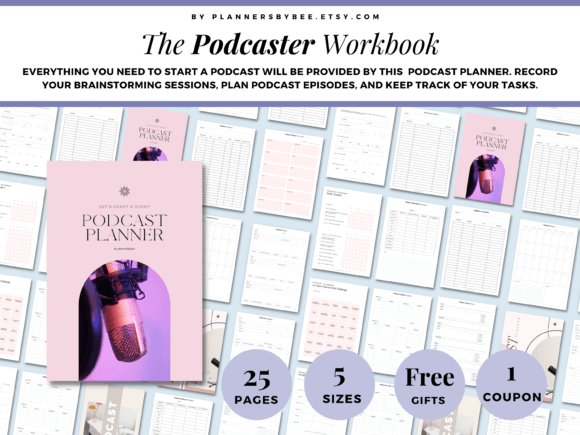
The true value of this system is found in its application across the entire podcasting lifecycle. It functions as a podcast tracking mechanism that covers every stage of production.
- Ideation and Planning: Use the brainstorming sections to capture conversation topics, triggers, and broad themes. This is where you sketch out the "personality" of your show, much like a designer selects a display font for a logo design. The template prompts you to define the purpose of each episode before you hit record.
- Guest Management and Interview Prep: For interview-based shows, the Interview Planning Workbook is indispensable. It provides a dedicated space to outline guest bios, key questions, and technical requirements. This ensures your conversations are professional and well-researched, reflecting positively on your brand identity.
- Production and Editing: The workflow checklists break down the recording and editing process. By creating distinct lists for pre-production, recording, and post-production, you ensure no technical step is missed. This mirrors the attention to detail required in editorial design or packaging design, where every element must be precise.
- Financial Tracking: A unique feature is the inclusion of Finance & Budget Planners. Podcasting often involves costs—hosting fees, equipment upgrades, or marketing expenses. Tracking these alongside your content helps you view your podcast as a legitimate business or professional endeavor, not just a casual hobby.
Enhancing Brand Consistency and Growth
Consistency is the engine of audience growth. In web design or social media graphics, visual consistency builds recognition. In podcasting, structural consistency builds listener loyalty. By using the Podcast Planner Template, you establish a reliable rhythm for your show. Listeners know when to expect new content and what kind of quality to anticipate.
This consistency directly influences your brand perception. A well-planned podcast suggests a professional operation, whether you are a solo creator or a small business. The ability to track podcast growth—monitoring subscribers, followers, and engagement metrics within the same system—allows you to make data-driven decisions. You can see which topics resonate most and adjust your content strategy accordingly. This analytical approach is similar to how a marketer evaluates the performance of a modern typography campaign, looking for what captures attention and drives engagement.
Implementing the System in Your Creative Process
Adopting this planner is straightforward, but maximizing its potential requires a shift in mindset. Treat it as a central hub for your podcasting operations. For entrepreneurs and small business owners, this template acts as a project management tool. It bridges the gap between creative ideation and logistical execution.
Consider the 30-Day Habit Tracker included in the kit. Building a podcast is a marathon, not a sprint. This tracker helps you develop the micro-habits necessary for long-term success, such as daily brainstorming or weekly analytics reviews. It reinforces the discipline required to maintain a professional presence in a crowded digital landscape.
Ultimately, the Podcast Planner Template is more than just a set of worksheets. It is a strategic framework designed to elevate your production quality and operational efficiency. By integrating this system into your workflow, you move beyond simply recording audio; you are crafting a polished, professional media product that stands out in the modern content ecosystem. Whether you are a content creator, a blogger, or a publisher, this level of organization is the foundation upon which successful media brands are built.