Roman Sculptures Clipart and Statues: Ancient Art for Modern Design
What Makes These Roman Illustrations Stand Out
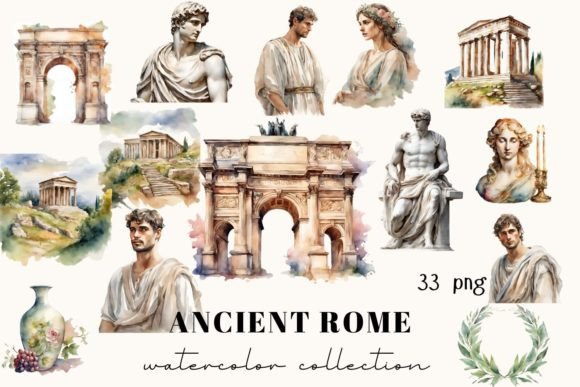
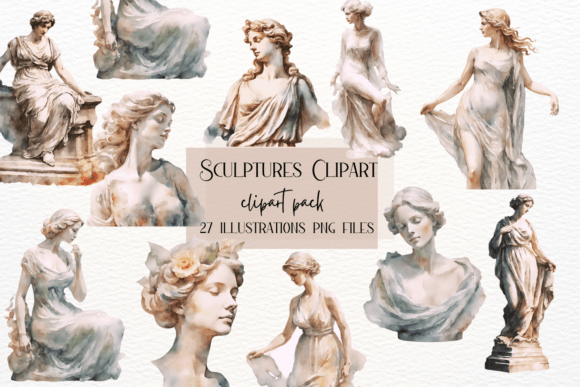
You're looking at a collection of 27 hand-selected Roman sculptures clipart pieces and statue illustrations that capture the gravitas and beauty of classical antiquity. Each artwork comes in transparent PNG format at 300 dpi, sized between 800 and 400 pixels (roughly 6 to 7 inches), giving you enough resolution for both digital screens and quality print output.
The visual personality here leans toward authentic classical aesthetics. Think marble textures, chiseled features, flowing togas, and the kind of stoic expressions you'd find in a museum wing dedicated to the Roman Empire. These aren't cartoonish or overly stylized interpretations—they honor the source material while remaining versatile enough for contemporary projects. The transparent backgrounds mean you can drop them onto any surface without wrestling with awkward white boxes or jagged edges.
What strikes me about well-crafted Roman sculptures clipart is how it bridges eras. A bust of Marcus Aurelius sitting next to modern sans serif typography creates visual tension that draws the eye. That contrast between ancient craftsmanship and clean contemporary design is something many creators struggle to achieve, and having reliable assets makes the process significantly smoother.
Where Roman Statue Imagery Shines in Real Projects
Let me walk you through practical applications where these kinds of design assets genuinely earn their place in your toolkit.
Brand Identity and Logo Design
Businesses in luxury goods, education, architecture, law, and wellness frequently draw on classical imagery to communicate authority and timelessness. A Roman statue illustration incorporated into a brand mark or supporting visual system signals sophistication without feeling stuffy. If you're building a brand identity for a client who wants to convey heritage or intellectual depth, these illustrations offer a shortcut to that aesthetic without commissioning custom artwork.
Editorial and Publishing Design
Magazine layouts, book covers, and academic publications benefit enormously from classical visual elements. A well-placed Roman sculptures clipart piece can anchor a feature spread, serve as a chapter opener illustration, or add visual weight to an otherwise text-heavy page. The key is restraint—one strong statue image paired with thoughtful typography reads as intentional rather than cluttered.
Social Media Graphics and Digital Marketing
Here's where things get interesting. Instagram accounts focused on history, philosophy, fitness, menswear, and even meme culture have embraced Roman statue imagery as a visual shorthand. The aesthetic carries instant recognition. For content creators and marketers building a feed with a cohesive mood, having a library of transparent Roman statues means you can produce consistent graphics quickly. Layer them behind text, use them as accent elements, or build entire quote card templates around them.
Packaging Design
Craft breweries, artisanal food brands, skincare lines, and wine labels have all tapped into classical aesthetics to stand out on crowded shelves. Roman sculptures clipart works particularly well here because the imagery reads as premium. It tells customers this product takes itself seriously without being pretentious. The transparent PNG format slots directly into packaging mockups and print-ready files.
Web Design and Blog Graphics
Bloggers and website owners in niches like history, education, philosophy, and personal development can use these illustrations to break up long-form content and create visual interest. A Roman statue placed strategically between sections acts as a visual rest point for readers. It also reinforces topical authority—when someone lands on your page about Stoic philosophy and sees classical imagery, the design supports the content's credibility.
Working With These Design Assets Effectively
Having great Roman sculptures clipart is only half the equation. How you use them determines whether your final design feels polished or amateur.
Font Pairing Considerations
Classical imagery pairs naturally with certain typeface families. A serif font with moderate contrast and elegant proportions complements the sculptural forms without competing for attention. Think of typefaces like Garamond, Playfair Display, or Cormorant for body text and headings. If you prefer a modern typography approach, a clean sans serif font like Montserrat or Lato can create striking juxtaposition. Avoid pairing Roman statue illustrations with overly casual handwritten fonts or playful script fonts unless you're deliberately going for ironic contrast—and even then, tread carefully.
Maintaining Visual Hierarchy
The detail in classical sculpture illustrations can overwhelm a layout if you're not mindful of scale and placement. Use these assets at sizes that support your hierarchy rather than dominate it. A small bust icon next to a heading works differently than a full-figure statue filling half the page. Both are valid approaches, but serve different purposes. Test your layouts at thumbnail size to make sure text remains readable and the overall composition holds together.
Color and Texture Harmony
Most Roman sculptures clipart depicts marble or stone tones—whites, grays, warm beiges, and subtle earth tones. This natural palette plays well with muted color schemes, monochromatic designs, and high-contrast black-and-white layouts. If your project uses bold, saturated colors, consider whether the statue imagery will feel integrated or jarring. Sometimes applying a subtle color overlay or duotone effect helps classical assets sit comfortably within a vibrant design system.
Commercial Use and Licensing
Before incorporating any design assets into client work or commercial products, verify the licensing terms. Understand whether the license covers unlimited projects, print-on-demand, merchandise, or digital products. For entrepreneurs and small business owners selling physical goods or digital downloads, this distinction matters. The collection described here is saved individually as PNG files, which simplifies asset management—no need to extract from sprite sheets or deal with grouped files.
Testing Across Contexts
Smart designers test assets in multiple scenarios before committing. Place your chosen Roman statue illustration on a dark background, a light background, a textured surface, and a solid color. View it at small sizes and large sizes. Check how it looks on a phone screen and in a printed proof. This kind of evaluation prevents surprises down the line and helps you build confidence in how these assets perform across your projects.
Building a Cohesive Creative Toolkit
Roman sculptures clipart and statue illustrations represent a specific aesthetic lane, and they work best when paired with complementary design assets. Consider building a project folder that includes your classical illustrations alongside matching textures, borders, ornamental elements, and carefully chosen typefaces. When everything lives together and shares visual DNA, producing consistent work becomes faster and more intuitive.
For designers, marketers, and content creators who regularly produce work in the classical, luxury, educational, or historical space, investing in quality illustration collections saves hours of searching through free stock sites where quality and licensing are unpredictable. Having 27 carefully curated Roman statues at your fingertips means you can respond to client requests, publish blog content, or update social media graphics without starting each project from scratch.
The enduring appeal of Roman sculpture in modern design speaks to something deeper than trend. These forms have captivated people for centuries because they represent mastery, beauty, and the human desire to create lasting work. Bringing that energy into your projects—whether through a subtle accent illustration or a bold visual statement—adds a layer of meaning that audiences instinctively recognize and respond to.